
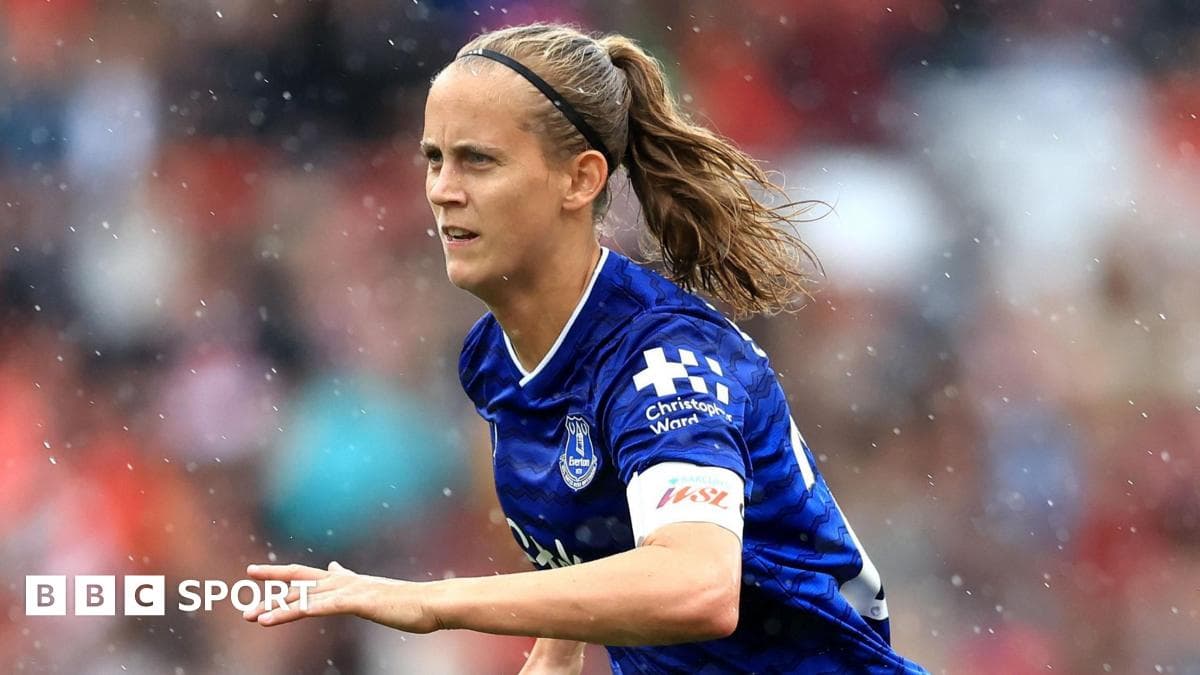
Katja Snoeijs has recently returned to training after having surgery to diagnose her endometriosis
Published March 26, 2026 • Source: bbc.com
By Emily Salley
Katja Snoeijs realised something was wrong when she felt "stabbing" pains and was forced off at half-time against West Ham last season.
"The cramps around my womb and my belly were just horrible. Even the back pain, it's just hard standing up straight, let alone sprinting or running," she said.
"It was a really emotional moment. It's really hard as a football player to come off a pitch unless like you have a broken leg or something."
Having to be substituted because of the pain was a turning point for the Everton forward, and the start of her journey towards an endometriosis diagnosis.
Endometriosis is a chronic, often painful, condition that occurs when cells similar to the lining of the womb grow elsewhere in the body.
It frequently leads to heavy, painful menstrual periods that can disrupt everyday life.
It is common, affecting one in 10 women in the UK, but it takes an average of eight years and 10 months, external (https://www.endometriosis-uk.org/getting-diagnosed-0) to properly diagnose.
For Snoeijs, it was quicker. After the game against West Ham, she made an appointment with a gynaecologist, but - like many other women with endometriosis - she did not get the answers she wanted.
Back at square one, she turned to Everton's club doctor and, after a series of tests showed her symptoms matched up with endometriosis, it was recommended she have keyhole surgery - the only definitive way to diagnose the condition.
Up until then, Snoeijs - who was born with a hole in her heart and a leg that grew to be six centimetres longer than the other - had sought to just handle her pain.
"Until I got the diagnosis, it was really challenging because I felt I was constantly doubting myself," she said. "You're like: 'Is this real? Is what I feel normal?'
"You know something is wrong, but because you're so used to pushing through the pain you try to ignore it as long as possible."
After having surgery a few weeks ago, the 29-year-old is already feeling the benefits.
"Just getting a diagnosis helps me understand myself better and that will help me become a better football player," she said.
How do athletes deal with endometriosis?
While surgery can help diagnose endometriosis and alleviate some of the pain, there is no cure for the condition and the symptoms are unpredictable.
Snoeijs said her period can sometimes pass without her feeling any symptoms, but at other times she feels "so much pain".
"Probably at the worst it feels like someone is continuously stabbing you in the stomach," the Netherlands international said.
"My lower back would always be like really sore and really tight. I get a sickness feeling at some points where you feel like you're going to throw up."
Other athletes have spoken about similar experiences.
England captain Leah Williamson, diagnosed with endometriosis in 2021, has revealed she feared missing the successful Euro 2022 campaign because of the condition, saying she sometimes "can't move" because of the pain.
Meanwhile Team GB's four-time Olympic medalist Elinor Barker almost quit cycling because she was in too much pain to even sit on a bike.
Emma Cox, the chief executive of Endometriosis UK, said Snoeijs' experience of pushing through the pain is "unfortunately all too common".
"We see it in a lot of women because they're led to believe that it's normal - nobody discusses the level of pain," Cox said.
And Snoeijs admits athletes are particularly prone to soldiering on.
"In your head, you're still doubting yourself thinking like: 'Oh, maybe I could have played through this'," she said.
"You don't want to let the team down but then you're still doing that because you're not being able to be your best self on the pitch.
"It's still easier to maybe give 80 or 70% than don't show up at all - even though sometimes that is the better thing to do."
Snoeijs has returned to training after her surgery and is keen to spread awareness about endometriosis - especially within women's sport.
"The reality is it affects one in 10 women. So probably for example in every WSL team there is a player struggling with similar symptoms," Snoeijs said.
"If you feel like something is wrong within your body, then trust yourself and seek the help that's needed.
"I've learned through the journey that sometimes it is better to protect yourself."
And Snoeijs is adamant her diagnosis will not define her.
"Yes, I have endometriosis but I'm also more than my condition," she said. "You can still reach WSL football and still play professional sports, do a lot of normal stuff, so it doesn't need to impact your whole life."
What is endometriosis?
Although symptoms vary from person to person, endometriosis can be severe and debilitating.
Common symptoms include pelvic pain, painful periods that interfere with everyday life, heavy menstrual bleeding and pain during or after sex.
Symptoms can be similar to other conditions, hence why it can take such a long time between first seeing a doctor and receiving a diagnosis, according to Endometriosis UK.
"We know that for 80% of those who go in to seek help, their symptoms aren't believed, recognised or sometimes people are told they're making them up," Cox added.
"So unfortunately, there can be quite a long delay with people not having their symptoms taken seriously or they're tested for the wrong things."
March is Endometriosis Awareness Month in the UK